<!DOCTYPE html>
Why Attic Cleaning Is Essential After a San Diego Rodent Infestation | Attic Guard
Why Attic Cleaning Is Essential After a San Diego Rodent Infestation
Rodent activity in an attic leaves more than a bad smell. It contaminates insulation, spreads pathogens, and opens entry paths that bring rats and mice back. In Escondido, CA, properties near Escondido Creek, Lake Hodges, and the Daley Ranch corridor face steady rodent pressure. Proper attic cleaning, rodent proofing, and insulation replacement restore safety and stop the cycle. This article explains how a full attic restoration protects indoor air, improves energy performance, and closes permanent entry points for North County homes.
Escondido’s Rodent Pressure Is Real and Predictable
San Diego County has diverse rodent populations. Roof rats follow the riparian lines of Escondido Creek and the canyons that connect Hidden Meadows, Harmony Grove, and Jesmond Dene. Norway rats thrive near older foundations and dense landscaping around Old Escondido and Felicita Park. Seasonal heat pushes rodents to cooler attic voids with steady food access. This pattern shows up each year near Lake Hodges, Eureka Meadows, and the Westfield North County Mall area, where restaurant waste, fruit trees, and water sources support large colonies.
Homes close to chaparral and canyon edges see frequent entry through eave gaps, roof vent screens, and soffit vents. Properties built before 1990 often include construction gaps at fascia boards, flashing laps, and roof-to-wall transitions. These small defects turn into primary access points as wood shrinks and seals dry out. Rodent proofing in Escondido needs to focus on these structural pathways and the local migration routes that feed them.
Attic Guard operates from 510 Corporate Dr # F. This location places the team within minutes of Daley Ranch, Rancho Bernardo, San Marcos, and Valley Center. Quick access matters when droppings, urine, and nesting material threaten indoor air. A same-day attic inspection in 92025 or 92029 can stop a small issue from spreading into wall cavities and HVAC systems.
What Rodents Leave Behind in an Attic
Rodents move along rafters and top plates. They build nests in fiberglass batts and blown-in insulation. They chew paper, plastic, and flexible ducting to create tunnels. Over weeks, a nest saturates the surrounding insulation with urine. Feces collect along runways and in the insulation layer. Pheromone trails guide other rodents to the same space. The result is a contaminated attic with a visible drop in R-value and a notable rise in odor and airborne particles during hot afternoons.
Typical findings in Escondido attics include rat droppings behind knee walls, urine-soaked insulation near gable vents, and chewed electrical sheathing near can lights. HVAC duct damage is common in houses around Harmony Grove and Lomas Del Lago, where roof rats favor elevated attic paths along truss chords. A damaged vapor barrier or open return leak can pull attic air and dander into the supply line. This can spread allergens and pathogens across the home each time the system cycles.
Pathogen risk is a serious concern. Rodent droppings may carry Hantavirus and Salmonellosis. Dry droppings can fragment into dust under foot traffic or during DIY cleanup. Without a HEPA vacuum and controlled airflow, that dust can drift into living areas through can light gaps, top plate penetrations, or attic hatches. The right cleaning method matters as much as the quality of the final seal.
Why Attic Cleaning Must Follow a Rodent Infestation
Many homeowners in 92026 or 92027 first call a pest control company for traps or bait. That step reduces live activity, yet it does not remove contaminated material or the residual pheromone trails. Without professional attic cleaning and decontamination, new rodents track the same routes into the attic. The odor persists. Airborne particles continue to circulate.
Proper attic cleaning includes controlled removal of droppings, nests, and urine-soaked insulation. It includes air scrubbing to limit drift into the home. It includes a targeted sanitizer application with a ULV cold fogger or thermal fogger that reaches cavities and irregular surfaces. Only then does it make sense to install insulation and seal entry points. This order prevents sealing live animals inside and stops cross-contamination.
Insulation replacement is key because infected fiberglass or cellulose can lose a notable share of its R-value. Compromised R-38 in a San Diego attic may act like R-20 or worse once it gets wet and matted. That drop shows up on energy bills, especially in 92029 where summer temperatures rise fast by late morning. Replacing soaked insulation helps the HVAC system keep pace with afternoon heat and reduces load on the compressor.
How a Professional Team Decontaminates an Attic
A licensed contractor in San Diego County follows a strict sequence that protects the home and the crew. Attic Guard follows a protocol that addresses biosecurity, airflow control, and final sanitation. The approach differs from basic pest control. It treats the attic like a contaminated workspace that needs careful negative air management and sealed waste handling.
The crew sets containment at the attic access. An industrial air scrubber runs to maintain clean air in living spaces. A HEPA vacuum removes droppings and loose debris. Large nests and urine mats get bagged and sealed on site. Hard surfaces such as top plates, truss webs, and duct exteriors get a sanitizer applied with a thermal fogger or ULV cold fogger. This breaks down urine pheromone trails and reduces the chance that newcomers follow the same path after exclusion.
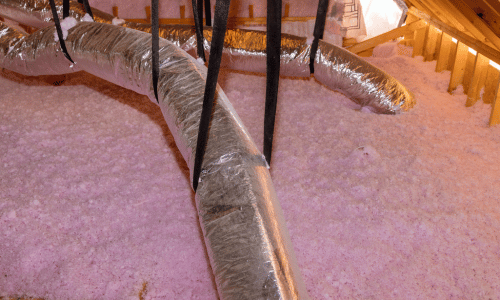
Where chewed wires are present, a licensed electrician inspects and repairs. Exposed conductors or arcing marks near junction boxes create real fire risk. HVAC ducts with chew holes or disconnected boots get replaced or reconnected with mastic. The attic is then ready for fresh insulation with a blower machine or faced batts if the framing allows.
Rodent Proofing in Escondido: What a Lasting Seal Looks Like
Rodent proofing must address gaps that are easy to miss during a quick walkthrough. Roof rats squeeze through openings the size of a quarter. Mice enter through a hole as small as a dime. A permanent seal depends on material selection and placement under real field conditions, not just caulk lines that split after a hot summer.
Attic Guard seals eave gaps, soffit vents, gable vents, and roof penetrations using 1/4-inch galvanized hardware cloth secured with screws and washers. Steel wool pairs with professional-grade sealant in tight masonry cracks. Roof vent screens get reinforced to stop lift from wind and to block prying by rats. Foundation cracks receive patching and weather stripping around doors to shut down ground-level travel paths. Flashing gets adjusted to close laps where rodents climb from gutters into attic voids. This is the difference between a quick fix and a stable exclusion.
Here in Escondido, roof vent screens are a common weak point near Old Escondido and properties built before energy codes tightened. If rodents can read light around a pipe boot, they exploit it. The team fastens the hardware cloth inside the vent assembly, not over it, so the part still vents as designed. The method preserves attic airflow while blocking entry. Over time, that detail stops nuisance noise above bedrooms and protects the new insulation from nesting.
Attic Insulation Choices After a Rodent Event
Insulation choice depends on budget, energy goals, and pest risk. Many Escondido homeowners select TAP Insulation for added pest resistance. This cellulose product includes a borate treatment that deters insects and makes nesting less attractive to rodents once exclusion is complete. Others prefer Owens Corning Pink Fiberglas or high-density Knauf products for strong R-values in tight rafter bays. Each option can deliver R-38 or higher when installed to spec with a blower machine or careful batt placement.
On older homes near Felicita Park or Harmony Grove, attic floors often include odd framing and previous patchwork. In those cases, dense-pack cellulose around can lights and chases fills micro-gaps that leak air. In newer construction near Eureka Meadows, blown fiberglass can reach target depth fast and keep weight low on the ceiling drywall. The crew confirms depth with markers and a final R-value check, so the system performs as promised once the weather turns hot.
Insulation should always follow a clean, dry, decontaminated surface. Trapping moisture or odor under new material only extends the problem. A post-fogger dry time and a second air scrub cycle make the space ready for fresh install. This discipline pays off on future real estate inspections as well, since the attic reads clean and shows a professional application pattern.
Recognizing the Early Signs of a Rodent Problem
Many calls from the 92029 and 92025 zones begin the same way. A homeowner hears scurrying sounds at night above a hallway. A faint smell appears when the heater turns on. A ring camera catches roofline traffic near a vine or a power drop. Early action limits spread and cost. A quick visit can verify species and map entry points before nesting grows.
The most common visual cue is a grease rub along rafters or around a pipe penetration. Dark smudges mark the runway. The next cue is shredded insulation or paper near a junction box. Droppings against the back of the attic hatch are another frequent sign. If insulation looks lower in patches, rodents may have tunneled or nested there, which reduces thermal performance and creates cold or hot spots in rooms below.
- Night scurrying or scratching from ceiling areas in bedrooms or hallways
- Rat droppings near the attic hatch, water heater closet, or top plates
- Urine odor intensifying on warm afternoons or when the HVAC cycles
- Chewed wires, gnawed plastic, or damaged HVAC duct insulation
- Insulation matted down, wet, or visibly tunneled with low R-value
If these signs appear in Hidden Meadows, Jesmond Dene, or near Lake Hodges, the odds favor roof rats. If burrows or heavy ground runs show up near trash and foundations, Norway rats may be involved. Species matters because roof rats travel high and often use trees and utility lines to access the roof. That changes the inspection focus to eaves, vents, and fascia.
Stepwise Restoration After Infestation
A controlled process protects health and delivers a stable result. The following sequence reflects real field practice on Escondido projects and considers local construction styles and weather patterns.
- Diagnostic inspection in Escondido with photos of droppings, nests, and entry points, plus R-value assessment
- Source control to stop live activity with traps while avoiding poison drift into wall voids
- HEPA vacuum removal of droppings and bulk waste with sealed debris handling
- Thermal fogging or ULV cold fogging with hospital-grade sanitizer to break urine pheromone trails
- Industrial air scrubber operation to reduce airborne particulates during removal and fogging
After sanitation, the team repairs chewed wires, re-seals ducts, and corrects gaps with galvanized hardware cloth, steel wool, flashing, and weather stripping. New insulation follows once surfaces are dry. A final walk-through confirms that roof vent screens are secured, soffit vents are screened, and eave gaps are blocked with long-life materials. The goal is a clean, quiet attic that stays that way through the next heat wave and the next rainy season.
Tools and Materials that Make a Difference
Some products raise the odds of a lasting fix. Galvanized hardware cloth with a 1/4-inch grid stands up to rodents and keeps ventilation open. Screws and fender washers hold it tight against metal or wood. High-grade steel wool backed by a lasting sealant fills odd-shaped penetrations where pipes and conduits exit. Roof vent screens gain extra bite with internal bracing. In high-wind pockets near the hills by Daley Ranch, that reinforcement matters.
For cleanup, an industrial HEPA vacuum captures fine particles. An industrial air scrubber reduces indoor migration of dust during removal. A thermal fogger reaches joints and baffles where hand sprayers do not. In some attics, a ULV cold fogger is used to coat large surface areas on truss webs and top chords. The blower machine then lays new insulation to even depth, with rulers placed for verification. This equipment mix reduces risk and raises the quality of the final result.
Map-Pack Signals and Why Local Detail Matters
Local relevance helps Escondido homeowners find fast help. Stating service coverage for 92025, 92026, 92027, 92029, 92030, 92033, and 92046 confirms reach across central and North Escondido. Referencing the San Diego Zoo Safari Park, California Center for the Arts, Lake Hodges, and Daley Ranch aligns with real service calls. Citing neighborhoods such as Hidden Meadows, Eureka Meadows, Harmony Grove, Lomas Del Lago, Old Escondido, and Felicita Park places the work in lived geography. This level of location specificity matches how rodents travel through canyons, creeks, and roofline corridors in San Diego County.
Attic Guard’s proximity to Escondido Creek and the Westfield North County Mall allows same-day visits for urgent attic cleaning or rodent proofing. The crew knows which sides of certain streets get earlier afternoon heat and how that changes attic odor and air movement. The company has completed multiple full attic restorations in the Hidden Meadows community to protect canyon-front properties where wind lift challenges vent screens. These field details translate into faster inspections, better exclusion choices, and fewer return visits.
Health, Energy, and Fire Safety: The Three Pillars of Post-Infestation Work
Attic cleaning and rodent proofing sit at the intersection of health, energy, and safety. Health comes first. Droppings and urine carry pathogens. A HEPA-led cleanup and sanitizer application cut risk. Airflow control limits spread during the process. Energy performance follows. Urine-soaked insulation loses loft. R-value drops. Rooms under the affected bays heat up faster and cool down slower. Fresh insulation brings performance back to code levels and protects HVAC equipment from overwork.
Fire safety is the third pillar. Chewed wires and open splices show up often in older attics near Old Escondido. Rodents chew for access and to wear down teeth. A quick visual is not enough. A pro checks for nicked conductors near staples and heat sources. HVAC ducts also need review. Flexible duct with chew holes can draw attic air into the system. That adds dust to indoor air and reduces system efficiency. Repairing these issues during restoration is practical and reduces later service calls.
What Sets an Attic Specialist Apart from a General Pest Company
Pest control brands such as Orkin, Terminix, and Western Exterminator focus on population knockdown. That service plays a role. But a lasting fix for Escondido homes needs rodent exclusion plus attic restoration. Attic Guard pairs the exclusion craft with biosecurity and insulation work, similar to what high-end building performance teams deliver. The company uses materials that outlast standard hardware store fixes. Flashing gets upgraded where needed. Weather stripping closes door sweeps that dragged for years. Roof vent screens receive a positive mechanical connection with the vent housing.
On the insulation side, TAP Insulation adds a pest-resistant layer that saves energy. Owens Corning and Knauf products deliver strong thermal performance with predictable coverage. The team makes product calls based on framing, duct layout, and budget. The result is a clean, sealed space that resists future nesting and holds design R-value through hot San Diego summers.
Practical Examples from Escondido Homes
In Hidden Meadows, a two-story home backed to a canyon had roof rats entering through a loose roof vent screen. The family reported scratching at 2 a.m. And a sharp odor near the upstairs laundry. The inspection found droppings, wire nicks near a junction box, and matted R-30 fiberglass. The team set traps, removed waste with a HEPA vacuum, fogged the area, reinforced every roof vent with 1/4-inch galvanized hardware cloth, and replaced insulation with TAP to R-38. The odor cleared within two days. A follow-up thermal scan showed even insulation depth. No activity has returned.
Near Lake Hodges, a single-story ranch had chewed flexible duct and urine-soaked batts over the living room. The AC struggled on hot afternoons, and the bill was up 20 to 30 percent. After decontamination, new mastic-sealed ducts and blown fiberglass restored airflow and temperature control. Exclusion at soffit vents and eave gaps closed the repeating entry paths. The homeowner reported quieter nights and a faster cool-down within the first week.
In Old Escondido, a classic bungalow had Norway rat entry at a foundation crack near an old drain line. Steel wool with sealant, crack repair, and a door sweep upgrade removed the ground-level access. HEPA vacuuming and fogging cleaned the attic bays above the kitchen where nesting debris had collected. A Knauf high-density batt solution fit the shallow rafters. The home passed the buyer’s inspection and closed on time.
Why DIY Cleanup Often Falls Short
Many homeowners try a shop vacuum and spray cleaner. This work can break droppings into finer dust and push it deeper into insulation. It can also spread odor as pheromones smear across surfaces. Without an industrial air scrubber and HEPA filtration, particles can float down into living areas through light fixtures and wall cavities. Bait-only strategies can also lead to carcasses in walls, which raises odor and fly activity.
A professional crew uses sealed bags for waste, keeps air moving in the right direction, and treats hidden surfaces that DIY sprayers do not reach. The fogger application reaches around truss webs and into tight channels. The crew then installs new insulation to code depth and leaves the attic looking uniform and clean. The difference shows up in air quality, energy use, and the absence of night noise.
Technical Notes for Homeowners Who Want the Details
Rodent exclusion works best when the smallest openings get the same attention as obvious gaps. A 3/8-inch space at a garage door corner can feed a steady mouse problem. A lifted shingle near a pipe boot can start a roof rat runway. The team uses mirror scopes to look behind chimney saddles and checks for daylight at vent stacks. Where soffit vents lack screens, 1/4-inch galvanized hardware cloth gets installed from the inside so the line sits clean and protected from weather. This keeps airflow while shutting down access.
On wiring, any sign of arcing or exposed copper triggers an electrician review. Wire nuts must sit tight. Junction box covers must be present. On ducts, flex lines need intact outer jackets and insulation, with tight connections and mastic at collars. On insulation, R-38 is a common target for San Diego County attics. Blown cellulose or fiberglass reaches that level with even coverage and depth markers. Batts must fill cavities without gaps or compression. Where can lights require clearance, barriers keep safe spacing and consistent depth.
For sanitation, hospital-grade disinfectants applied via thermal fogger or ULV cold fogger coat surfaces evenly. The agent breaks down urine salts that carry pheromone signals. This step is a major reason re-entry rates drop after a full restoration. It denies rodents the scent map they use to navigate and reunite with prior nests.
Local Codes, Licensing, and Warranty
Attic Guard operates as a CSLB-licensed contractor in San Diego County. The company is bonded and insured. The team follows local code for ventilation and insulation depth. The crew respects fire-blocking and can light clearance rules. Many projects receive a lifetime exclusion warranty on sealed entry points. That promise rests on material choice and technique. It also rests on the discipline of full decontamination and insulation replacement where needed. Sealing clean surfaces leads to a tighter, longer-lasting bond.
Eco-minded clients often ask about product safety. The decontamination products used are selected for hospital-grade performance with low residue when dry. Fogged areas are allowed to dry fully before anyone re-enters. This practice keeps living spaces safe and odor control consistent.
Service Area and Response Times Across Escondido
Coverage spans Escondido zip codes 92025, 92026, 92027, 92029, 92030, 92033, and 92046. Calls from Rancho Bernardo, Poway, Vista, San Marcos, Valley Center, and greater San Diego also receive service. Proximity to 510 Corporate Dr # F supports rapid on-site arrival. The crew knows how traffic near the California Center for the Arts and Westfield North County Mall moves during peak hours. That planning keeps inspection windows tight and projects on schedule.
The team often schedules attic cleaning in the morning to limit attic heat exposure. Fogging and air scrubbing follow in sequence. Insulation replacement lands the same day when dry time allows or the next morning if humidity runs high. This rhythm reduces family disruption and brings the home back online fast.
Common Questions from Escondido Homeowners
Do they remove everything in the attic? Not always. Items in sealed bins can stay if surfaces are clean after fogging. The team photographs conditions and discusses options before removal. Stored paper goods or fabric often leave because they hold odor and contamination.
Is attic cleaning safe during occupancy? Yes, when containment and HEPA air control are in place. Crews isolate the access, run industrial air scrubbers, and keep negative flow so dust does not enter living spaces. People and pets stay clear of the work zone during active cleaning and fogging.
What about warranty on exclusion? Rodent exclusion services include a lifetime warranty on sealed entry points. If a sealed point fails, the crew returns to fix it. Ongoing maintenance like trimming branches away from rooflines helps, and the team explains those steps at the final walk-through.
Do they work with pest control companies? Yes. Trap deployment can run before, during, and after cleaning. The focus stays on physical exclusion so the home does not depend on bait to stay quiet.
How long does the odor last after cleaning? Most odors drop within 24 to 72 hours after fogging and air scrubbing. Severe cases with carcasses in walls may need a follow-up visit. The inspection looks for signs before work starts to reduce surprises.
Why Fast Action in Escondido Saves Money
Rodent colonies grow in cycles. A delay of a month can turn a few nests into many, and a few chewed wires into a hazard. Urine tracks spread. Insulation compresses. By the time smells reach a hallway or master bedroom, damage often spans most of the attic. Fast inspection, fast trap deployment, and quick decontamination cut scope and cost. In the 92029 area, where summer attic temperatures climb hard by noon, odor and damage accelerate. Quick action keeps the work smaller and the home safer.
Materials and Brands that Support Long-Term Results
TAP Insulation brings pest resistance and sound reduction with a thermal profile that performs well in our climate. Owens Corning Pink Fiberglas and Knauf insulation offer consistent R-values and compatibility with varied framing. For exclusion, galvanized hardware cloth, steel wool, and heavy-gauge roof vent screens outperform foam-only patches. Foam has a place as a backer in some gaps, but rodents can chew through it unless it pairs with metal barriers.
Tools like an industrial HEPA vacuum, thermal fogger, ULV cold fogger, and an industrial air scrubber increase safety and quality. The blower machine for insulation sets even coverage and proper depth. A laser measure and depth rulers confirm results visually and in writing. These details serve homeowners well during a future sale or refinance, since the attic reads clean and documented.
Why Attic Guard
Attic Guard focuses on rodent proofing, attic cleaning, decontamination, and insulation replacement. The company pairs construction skill with biosecurity practice. The crew understands how roof rats track along Escondido Creek, how wind near Daley Ranch tests vent screens, and how heat near Lake Hodges raises odor carry into living rooms. The team’s work stands up because the process is disciplined and local knowledge guides each decision.
The firm is locally owned, CSLB-licensed, bonded, and insured. Free attic inspections support fast decisions. The rodent exclusion warranty covers sealed entry points for the life of the home. The company uses eco-friendly decontamination products and pheromone-blocking methods that break the repeat cycle.
What Homeowners Can Do Before the Crew Arrives
Make access clear. Move cars from under the attic hatch if it opens in the garage. Keep pets out of the work path. Share recent rodent sightings and photos. If a camera caught roofline traffic near a palm or vine, point it out. Trim vegetation that touches the roof if possible. The crew will handle the technical work, but easy access saves time and keeps the day smooth.
Final Thought: Clean, Seal, and Insulate for a Quiet, Efficient Home
Rodent proofing without cleaning leaves odor. Cleaning without exclusion invites a repeat. Insulation without decontamination covers a problem without fixing it. A full attic restoration brings all three together. In Escondido, that means a home that stays quiet at night, holds temperature through heat waves, and reads clean from the attic hatch to the far corner above the garage. That is the outcome that lasts through seasons and real life.
Attic Guard | Escondido Office
Business Name: Attic Guard
Address: 510 Corporate Dr # F, Escondido, CA 92029, United States
Primary Phone: +1 858-400-0670
Direct Line: +1 858-786-0331
Website: atticguardca.com/escondido
Connect With Us & Read Reviews
Yelp Reviews Facebook Instagram